
Traffic Court Records in Wilkes County
Traffic matters in Wilkes County belong to District Court, with the Clerk of Superior Court keeping the case records. There is no municipal court involved here. No county driver-record database either. North Carolina resolves its traffic tickets before a District Court judge, and Wilkes offers connected public channels for Portal access, court dates, payment details, and the criminal calendar.
What can a traffic court record show? The charge linked to the citation, the court setting, case events, a plea or process event, a disposition, and any financial entries where they apply. One caution: a town name printed on the ticket does not create a separate city court docket for that matter.
Wilkes Traffic Cases Begin in District Court
Every Wilkes traffic and infraction case starts in District Court. The Clerk of Superior Court keeps the record. A town clerk does not. A justice-of-the-peace office does not either. A qualifying appeal moves up to Superior Court for a trial de novo. That means a fresh trial, not a review of the earlier record. The official District Court overview lays out the state trial-court role. That role covers infractions and criminal matters alike.
How to Look Up a Traffic Ticket
Start at the official traffic-violations service and open Citation Services. Enter the citation number and hit Search Citation. That shows which online options exist for that ticket. No citation number in hand? Citation Query by Defendant Name is the official alternate route. For wider case detail, Portal Smart Search works with a record number or a name, and Portal Search Hearings is the way to reach a current setting. When a citation has not posted yet, or a public result is confusing, the clerk and the courthouse counter remain the local fallback for a docket search.
- Read the citation for its number, issued location, printed date, and any court information.
- Enter the citation number in Citation Services and select Search Citation for available online options.
- Use the defendant-name query if the citation number is unavailable, then confirm the result against the document.
- Use Portal Smart Search for the Case Summary and Search Hearings for a current setting.
- Call the Wilkes clerk or visit the courthouse counter if the citation is new, missing, or does not match the document.
Wilkes Citation Services Search
Citation Services runs a quick test of what a ticket can do online. Smart Search opens the Case Summary, while Search Hearings takes you to the current calendar. Keep the citation number and any later case number close. Each one works as a direct search key. Each fits a different stage of the case lookup.
| Field or route | Use | Access note |
|---|---|---|
| Citation number | Enter it for Citation Lookup. | Required for that citation-number route. |
| Search Citation | Runs the citation search. | Returns available online citation options. |
| Defendant name | Alternate Citation Query. | Use when the citation number is unavailable. |
| Portal Smart Search | Search by record number or name. | Use for available case detail and Case Summary. |
| Portal Search Hearings | Search a current setting by case or party criteria. | Use for current date, location, and time. |
| Make Payments | Portal payment option. | Eligibility must be checked for the particular citation. |
Wilkes County moved to the eCourts Portal for public case and hearing lookup in 2025.
The court's traffic-citation options lay out the ways to handle a ticket.
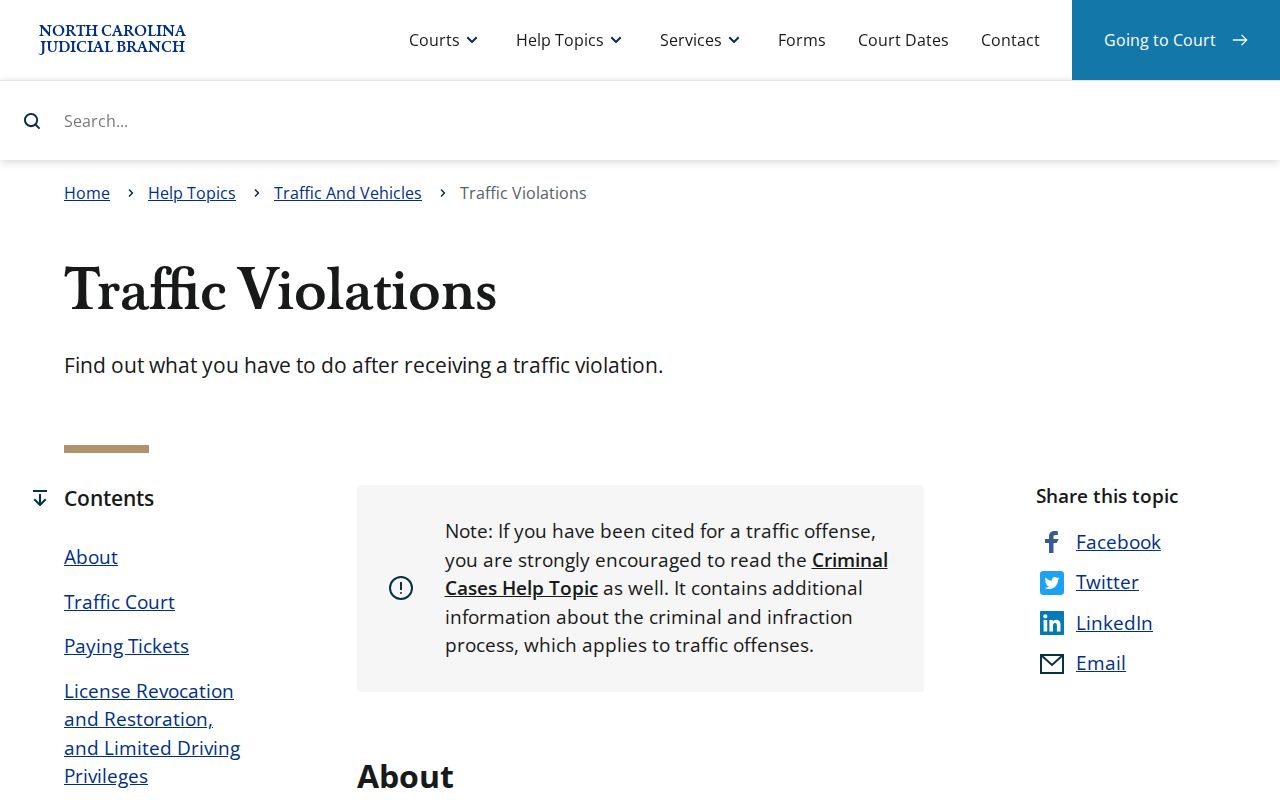
That options page makes one point clear. The online path depends on the citation, and it never replaces the current court record or confirmation from the clerk.
Wilkes IF and CR Case Codes
A traffic matter that gets an Enterprise Justice case number carries type letters. Those letters are a limited clue. IF marks a case with infractions only. CR marks a case with at least one criminal offense. A mixed matter can carry CR, and separate charges can hold separate case numbers. The letters alone do not reveal the final result or the right response, so read the Case Summary, the current hearing data, and the citation together.
An Enterprise Justice number runs two digits of year, an alphabetic case type, and a six-digit sequence. A three-digit county identifier rounds it out. The statewide example 21CR000003-910 shows the format. It is not a Wilkes case.
Finding Your Traffic Court Date
Read the printed citation first. Then confirm the setting through Portal Search Hearings. The Case Summary and Wilkes's official criminal-calendar endpoint also work. Search Hearings can find a current setting by case, party, attorney, or judicial officer. Courtroom criteria work as well. Its result will not tell you whether a hearing is virtual or in person. One session can hold hundreds of traffic cases, so the calling order may shift. With a setting close at hand, check with local staff or the clerk.
| Citation number | The number printed on the document, used for Citation Services; retain it even after a court case number appears. |
|---|---|
| Case number | An Enterprise Justice identifier such as 21IF000003-910 or 21CR000003-910; the example is statewide, not a Wilkes case. |
| Court and location | District Court and the current hearing location shown in the available court record or calendar result. |
| Date and time | The printed appearance date or later current setting; verify a continuance through the later event or staff. |
| Status | Available case events, hearing information, and disposition data, not a guarantee of the next calling order. |
The Wilkes Court Calendar page gives the broader court-date context. For a traffic matter, though, the citation and the current case record still control.
Wilkes Traffic Date and Call Order
A date on the calendar is not a promise of when your case gets called. Portal's FAQ notes that hearing orders and call lists vary by court or judge. It sends people to the Courtroom Clerk for call-list details. The official Wilkes county page links a criminal calendar at calendars.nccourts.org. Open that address in an ordinary browser. Or ask local staff to verify the current calendar.
A judge may grant a continuance, but none is ever guaranteed. When a setting moves, read the later Case Events and hearings. Do not assume the old date simply vanished from the record.
Paying or Contesting a Ticket
Every ticket lists a court date. Some minor speeding, equipment, and other waivable offenses can be resolved before that date with a signed waiver and payment. Eligibility depends on the individual citation. This is not a generic pay-later option. Paying counts as resolving the case rather than contesting it. Someone who contests follows the citation and court-date process. They appear as required, or use any online resolution the court offers. Citation Services flags which tickets qualify for an online reduction or dismissal.
| Paying an eligible waiver | Contesting the citation |
|---|---|
| Requires the cited matter to be eligible and a signed waiver with the required payment. | Uses the citation and court-date process instead of an automatic waiver resolution. |
| Online payment uses credit or debit when the citation offers that option. | Appear as required or use an offered online resolution for that particular citation. |
| Wilkes in-person payment accepts cash, card with processing fees, money order, or certified check; no personal check. | Ask the court about a current setting, a requested continuance, or any available procedure before relying on a prior calendar entry. |
| Mail payment has the local money-order or certified-check limits stated below. | A case’s Case Summary records the court process and later disposition when public. |
Missed date or unresolved payment: The court record controls. A case may be marked called and failed, and the applicable statutes set reporting rules for an FTA not cured in 20 days and for a fine, penalty, or cost unpaid within 40 days after judgment. Some cases can also involve an arrest order or bond forfeiture. These outcomes are not a blanket automatic result for every citation, so contact the Wilkes court and check the current case record.
Wilkes Mail Payment Rules
Paying a Wilkes traffic citation by mail works only within narrow limits. Send a money order or certified check. Make it out to the Wilkes County Clerk of Superior Court. Write the citation number on it. Mail it to Clerk of Superior Court, Wilkes County Courthouse, 500 Courthouse Drive, Suite 1115, Wilkesboro, NC 28697. Cash does not travel well here. The clerk will not take a personal check or a credit or debit card through the mail. Nor is mail treated as a fix for every citation on the Wilkes docket.
Pay in person and your choices widen. The Cashier's Office takes cash, MasterCard, Visa, American Express, Discover, money orders, and certified checks. Card payments pick up processing fees. For the full picture, the Wilkes payment-information page lays out what the clerk accepts. It shows the current rules straight from the court.
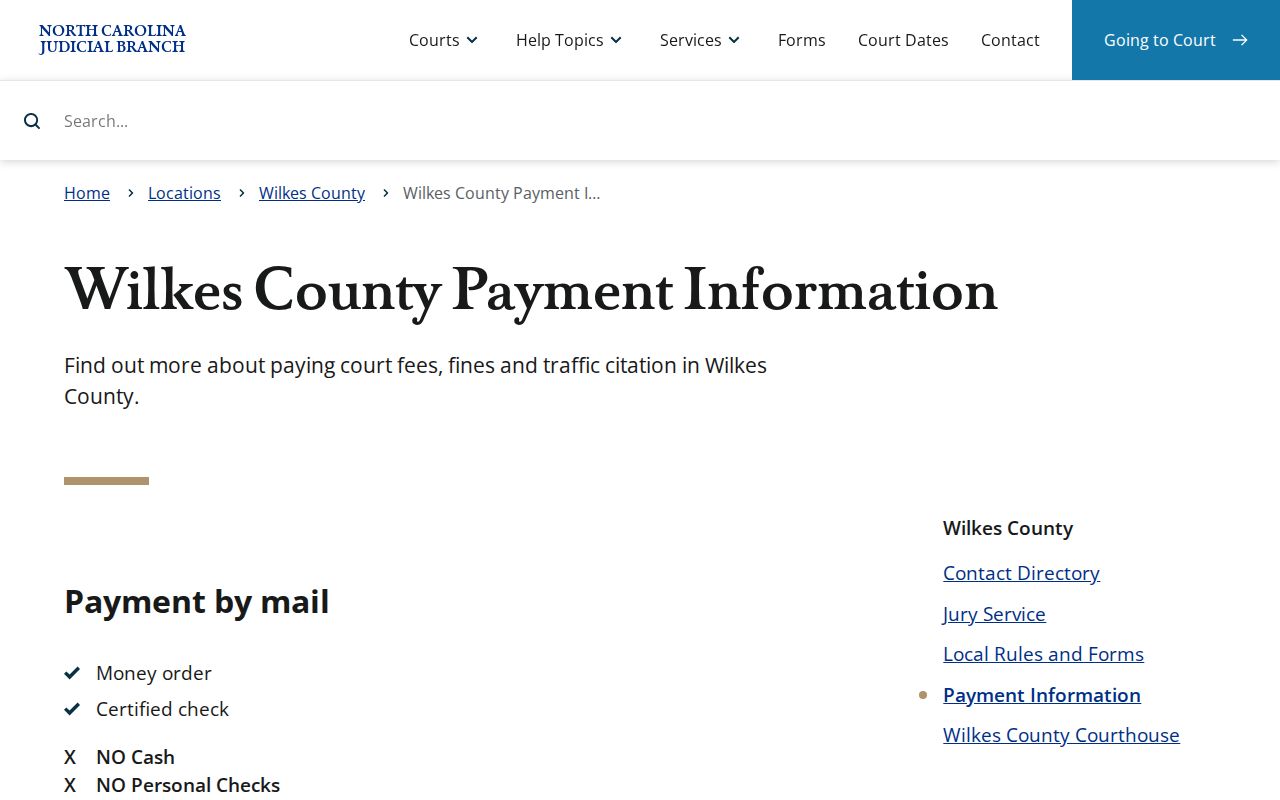
Knowing the payment methods is only half the picture. Whether a particular Wilkes traffic matter can be paid online is a question Citation Services answers, not the payment list itself.
Wilkes FTA Reporting Timeline
Two statutes drive the timeline. G.S. 20-24.2 tells the court to report a failure to appear that is not cured within 20 days, and a fine, penalty, or cost left unpaid within 40 days from judgment. G.S. 20-24.1 covers revocation for failing to appear or pay. NCDMV sends a person back to the court where the citation was received or remains unpaid, and DMV eligibility comes only after court compliance. None of this reporting settles a case's status without its docket. The G.S. 20-24.1 revocation rule sets out that statutory framework in full.
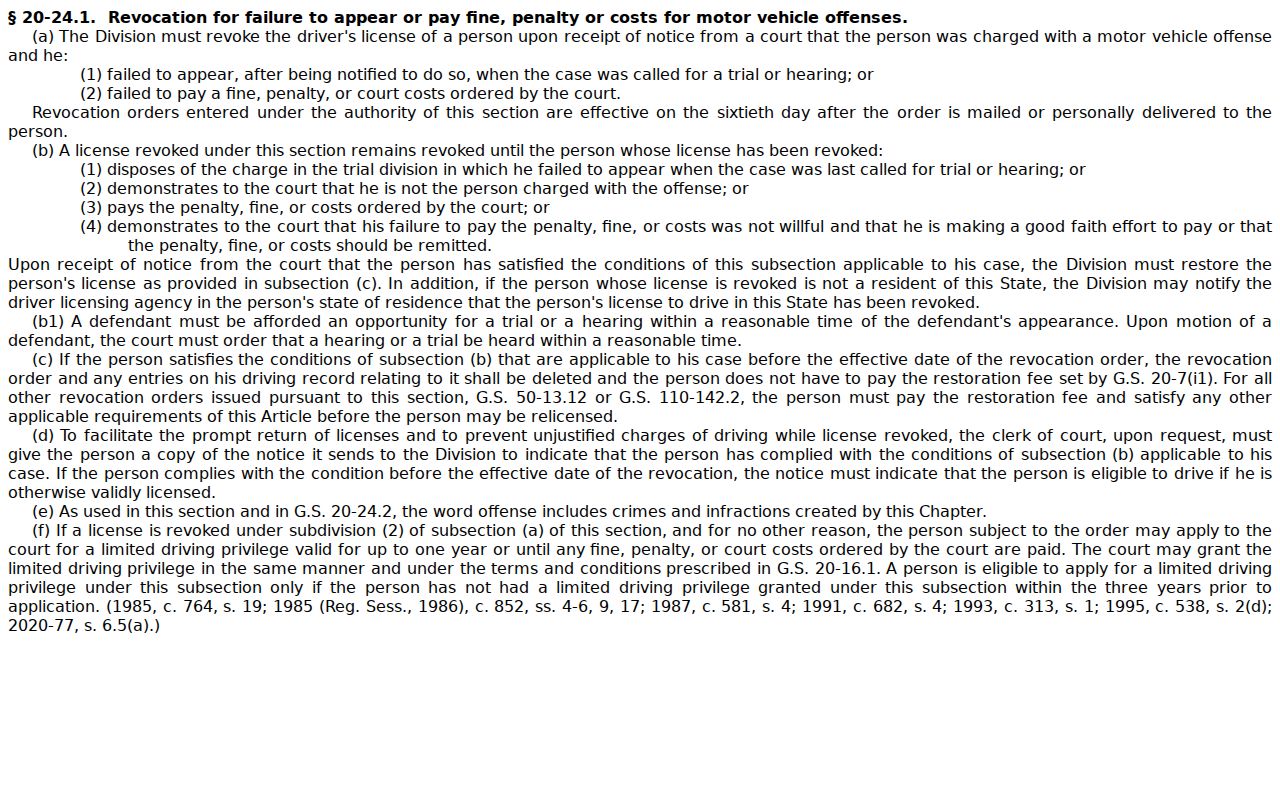
The statute gives the framework; the Wilkes case record shows whether and how it applies. For the court-side clock, the G.S. 20-24.2 reporting deadline states when the clerk must report the matter.
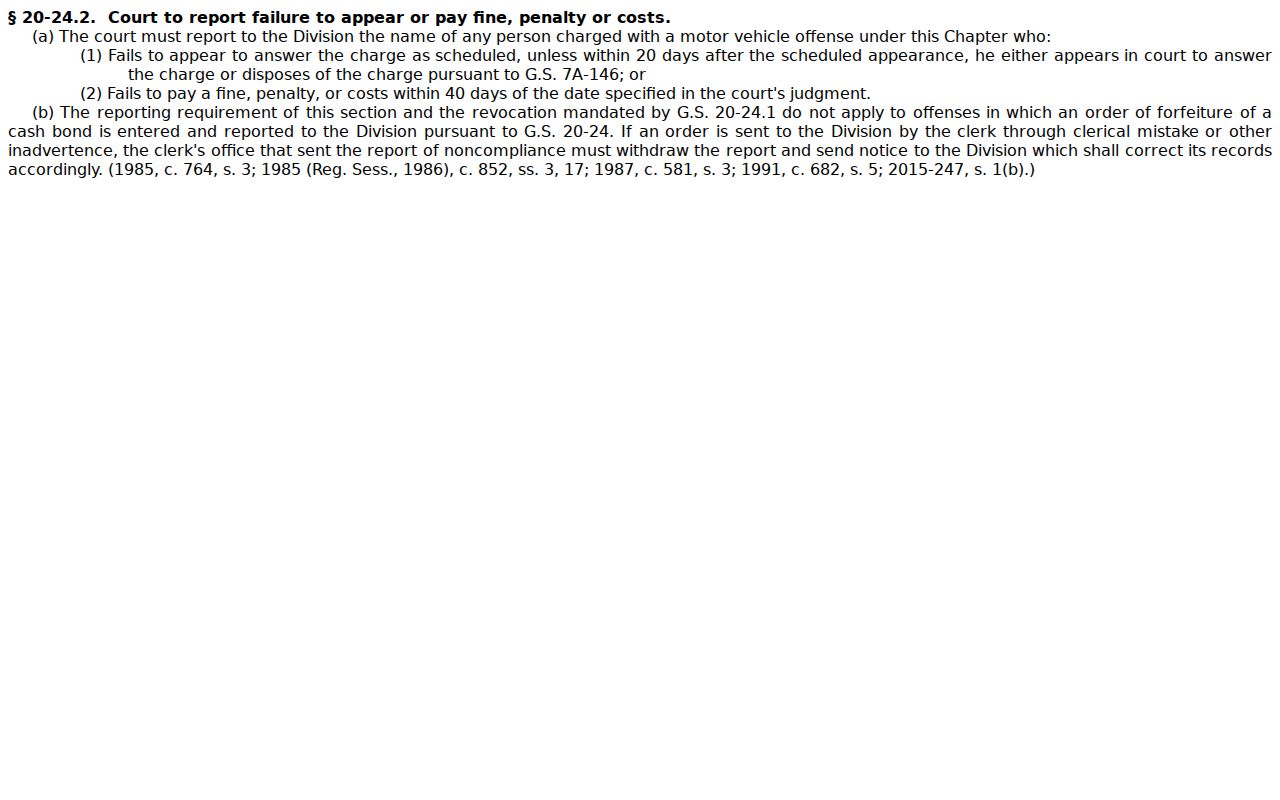
That deadline runs on the life of the unresolved case. It is why a current Wilkes court record and a call to the clerk both matter.
Court Traffic Record vs Driver Record
Two records, two offices. The Wilkes traffic court case lives with the Clerk of Superior Court. NCDMV holds the driver record and handles license status and statutory revocation. The court sometimes reaches a final conviction or finding of responsibility. It then reports that to NCDMV. Searching the court docket does not replace the separate NCDMV record process.
| Comparison point | Court traffic record | Driver record |
|---|---|---|
| Custodian | Wilkes Clerk of Superior Court / General Court of Justice. | North Carolina Division of Motor Vehicles. |
| Core information | Citation-linked case, charge, setting, case events, plea or process event, disposition, and financial data when applicable. | Separate NCDMV-maintained record and DMV-administered status information. |
| Purpose of the channel | Portal, Citation Services, clerk, and court calendar answer court-case questions. | NCDMV handles its own record and compliance processes, outside the court docket. |
NCDMV failure-to-appear information points drivers with an unresolved citation back to the court.
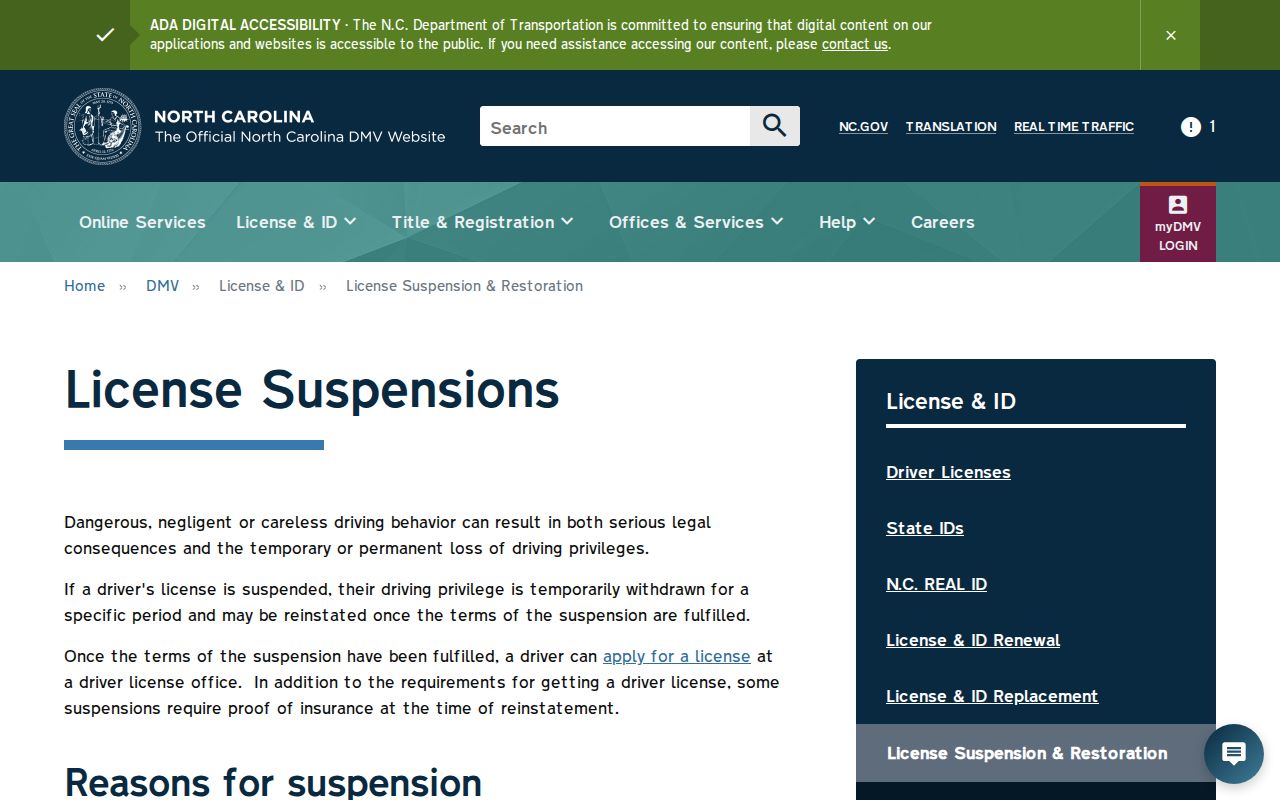
That direction from NCDMV marks the dividing line. Clear the court case with the court first, then trust DMV status information.
Wilkes PJC Record Entries
A prayer for judgment continued, or PJC, is a traffic-case option a judge may grant. Costs still attach. Its effect varies from case to case. The case history can show the relevant event. Wilkes publishes no local PJC schedule, eligibility form, or fixed fee. Citation Services can tell you whether an online reduction or dismissal applies to a specific eligible citation. A PJC is decided in court. It is not decided through a generic Portal search of the Wilkes docket.
Wilkes State Citation or Town Ticket
North Wilkesboro and Wilkesboro each run a town parking-payment route. Neither has a separate municipal court docket. Ronda's portal handles town services, not court citations. So a town parking ticket may have a town counter. A state citation runs through the Wilkes District Court, the Portal, the criminal calendar, and the clerk. Keeping them apart stops a town parking amount from being read onto a state traffic case. For a Uniform Citation, the amount, waiver eligibility, current date, and court record all depend on the individual matter.
Fees and Copies
Wilkes posts no countywide traffic fine schedule. Citation amounts and court costs turn on the case and the offense, so pin them down through Citation Services, the Portal, or the Wilkes clerk. For copies of a traffic case, G.S. 7A-308 sets the clerk fees, subject to confirmation at the counter. The county publishes no local PJC or deferred-type fee.
| Item | Current finding |
|---|---|
| Citation amount and court costs | Case- and offense-dependent; confirm through Citation Services, Portal, or clerk. |
| Online or in-person card | Processing fee applies in Wilkes; amount not published on the local page. |
| Mail payment | Money order or certified check; no cash, personal check, or card by mail. |
| Clerk copy preparation | $2.00 first page of each document and $0.25 each additional page under G.S. 7A-308. |
| Certificate under seal | $3.00 under G.S. 7A-308. |
| PJC or local deferred-type fee | Fee not located in official sources. |
The clerk fee statute covers copy and certificate charges, never the fine on a given citation.