
How to Get Court Records
Need a case number first? Use the Smart Search on the North Carolina eCourts Portal. It pulls up a Wilkes case and its number. It also shows the public Case Summary or Register of Actions. Wilkes moved onto this system with the July 2025 eCourts conversion. Treat the Portal as a reference tool. It is not the certification desk. For an existing case file, the Clerk of Superior Court holds the local record. A public self-service terminal sits at the courthouse. In-person file inspection gives you a second route whenever a document never shows up online.
- Use the Portal to find the case by record number or name and note the exact case number.
- Decide whether the need is a Case Summary, a plain copy of a filed document, a clerk-issued certificate, or a transcript or audio record.
- For a nonrestricted file, use the Wilkes public terminal or ask to inspect the file at the clerk’s office.
- Contact or visit the Clerk of Superior Court with the case number and the document or certification request.
- Confirm the fee, restriction status, and available delivery method before sending any payment.
Wilkes publishes no general online copy-order form, no general email copy-order workflow, and no local turnaround promise. Its payment instructions permit mail payment only by money order or certified check where payment is eligible. That narrow rule is not a published mail-order process for every court document.
Wilkes Court Record Custody
One boundary trips up a lot of people. The Judicial Branch public-records request form deals with records held by the North Carolina Administrative Office of the Courts. That office is known as NCAOC. The form itself says NCAOC is not the custodian of court documents or case information. It sends anyone seeking a local case record to the clerk in the county where the case was filed. A Wilkes pleading, judgment, or estate paper belongs with the Wilkes Clerk of Superior Court. A Wilkes docket belongs there too. Start there.
The NCAOC route still matters for administrative records that NCAOC actually holds. Its policy covers inspection, copying, response handling, denial review, and voluntary mediation for those materials. None of that moves a Wilkes case file out of the local clerk's hands.
Check the official NCAOC request form to see what that administrative route spells out.
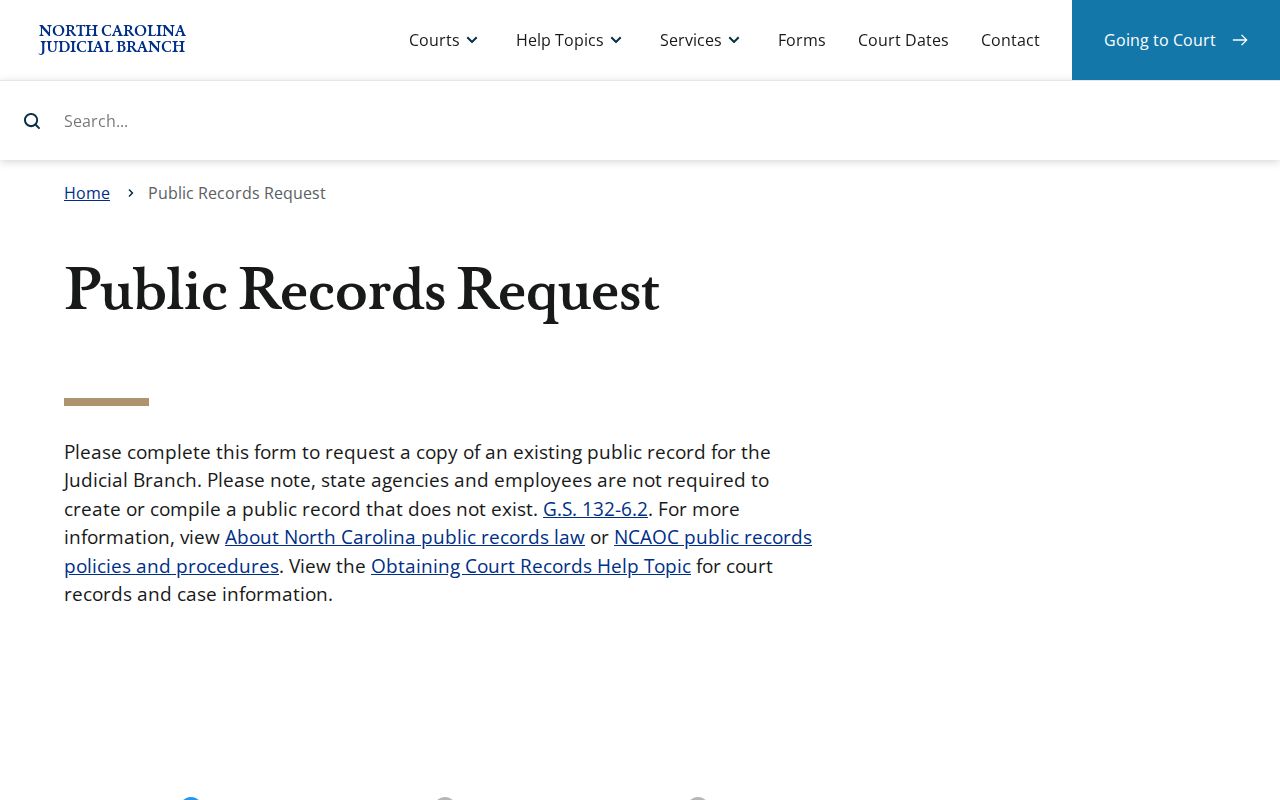
That custody line explains the practical advice. For a local court document, a case number and a request to the clerk beat a statewide administrative request every time.
Types of Court Records
Not all Wilkes court records are the same product. The online Case Summary is the chronological docket reference. The case file itself may hold pleadings, orders, judgments, exhibits, and more, within public-access limits. A clerk-issued copy or certificate does a different job than a quick screen view. Criminal, civil, special-proceeding, and estate matters all run through the unified Clerk of Superior Court, even when the cases travel District Court, Superior Court, magistrate, or clerk paths.
- Case Summary or Register of Actions, with dated events, hearings, dispositions, and available financial information.
- Filed case documents, such as public pleadings, orders, judgments, and attachments.
- Criminal and infraction records, including the case history and court settings that are publicly available.
- Civil, special-proceeding, and estate records held under the local clerk’s unified records role.
- Transcript or audio material, when it exists and is available through the proper recording channel.
Before requesting a document, confirm the exact record number or public case history. The county's Case Search route helps locate the Case Summary.
Wilkes Court Record Terminal
The courthouse is a real fallback, not just an address. The Judicial Branch states that every county clerk's office has public self-service terminals. At the Wilkes clerk's office, a terminal can open criminal, civil, special-proceeding, and estate information, and the actual file may be inspected in the county where the case sits. For criminal material, the statewide court-records guidance points to searches by defendant name, case number, victim, or witness. It lists no Wilkes terminal count, floor, or staff-search service.
The official court-records access information lays out the separate terminal, file, copy, audio, and transcript channels.
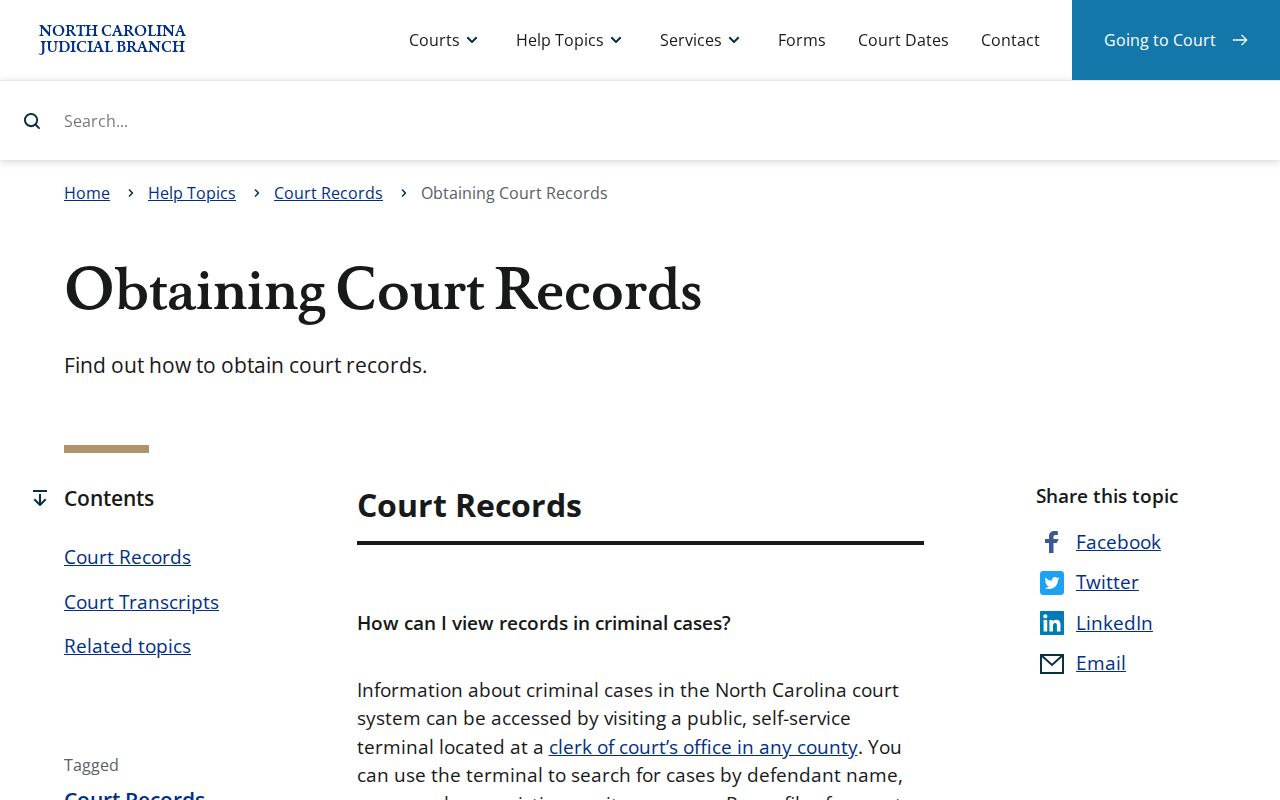
A terminal search can flag a public record. Inspection and clerk-issued copies remain the right next steps for a full file or an authenticated record.
Note: Call ahead about current access. Published sources do not spell out Wilkes counter procedures, document retrieval timing, or terminal availability details.
What a Court Record Contains
The Portal calls its detailed docket view a Case Summary or Register of Actions. That field structure beats treating every Wilkes case as one interchangeable paper file. A full view can show general case information, assignment details, party information, and causes of action where they apply. It may also list a chronological Case Events list, hearings, dispositions, and financial information. Still, expect gaps. A document image, exhibit, or identifier may be unavailable. That can happen even when the case itself is visible.
| Case number | An Enterprise Justice identifier such as 21CR000003-910, built from year, case type, sequence, and county identifier. |
|---|---|
| Case and assignment information | General case metadata and court-assignment details shown in the available Case Summary. |
| Parties and case category | Available party information and, where applicable, a cause of action or criminal charge. |
| Case Events and hearings | The dated Register of Actions timeline and current or past court settings. |
| Disposition and financial information | Available outcome and financial fields; neither replaces a current clerk confirmation or certified record. |
Case-specific restrictions govern what is public. A docket entry being visible does not mean every filing, exhibit, or personal detail beneath it can be copied.
Wilkes Portal PDFs and Court Copies
A Portal view or document image is handy for reference. It is not automatically a certified court record. The clerk prepares a plain copy. A certificate under seal is a separate service. An exemplification is a higher-form authentication listed on its own line in the fee statute. Say which form you need up front, so the clerk quotes the right service instead of treating every request as a generic certified PDF.
The official G.S. 7A-308 fee page shows the clerk's copy, seal, and exemplification charges.
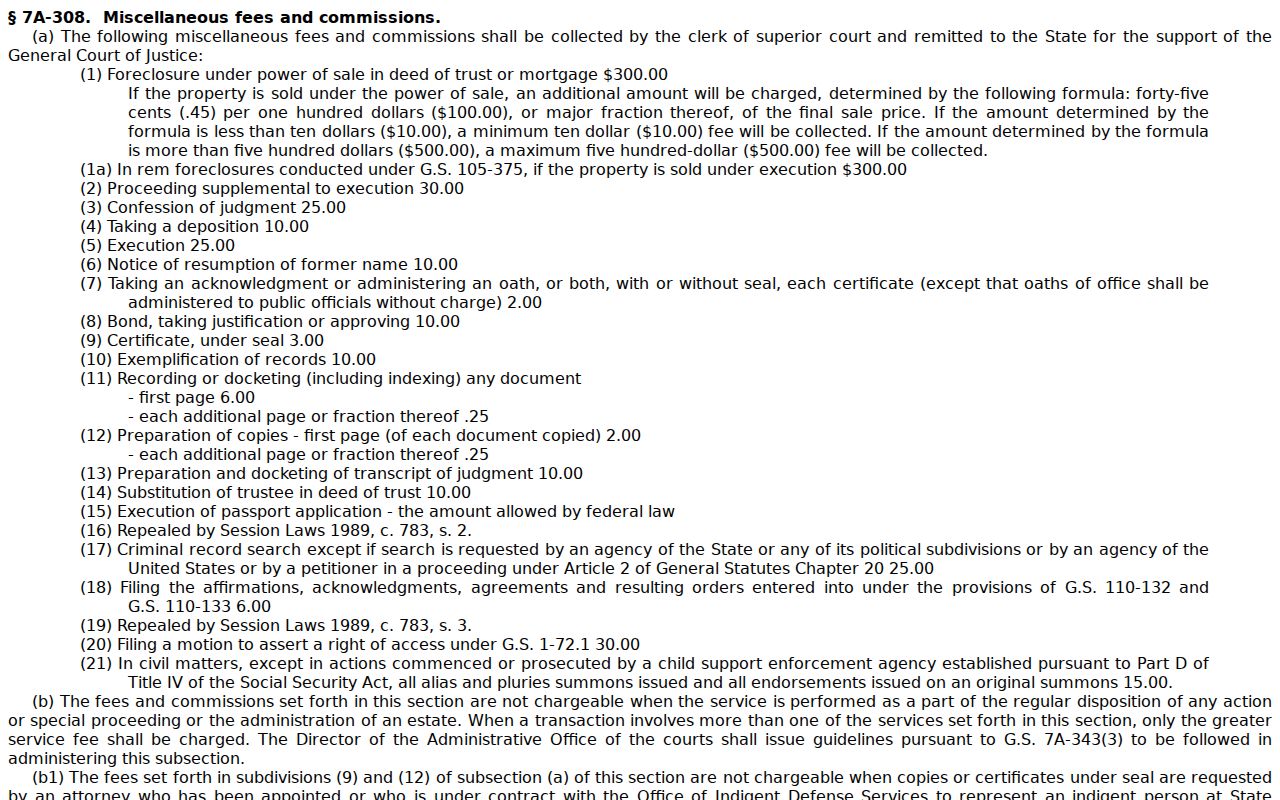
Two different products sit behind one docket. The free Portal view is a reference record, while the clerk's authenticated copy is the record that carries legal weight.
Certified Copies and Fees
G.S. 7A-308 governs what the clerk charges. The first-page fee attaches to each document copied, so there is no flat "docket sheet" price. The statute adds a state criminal-record-search fee as well. That fee is not the normal route to reading a free Portal record. Before you order, ask the Wilkes clerk to confirm the document count, whether a certificate under seal is required, and the total.
| Item | Amount |
|---|---|
| Clerk preparation, first page of each copied document | $2.00 |
| Each additional page or fraction | $0.25 |
| Certificate under seal | $3.00 |
| Exemplification | $10.00 |
| Preparation and docketing of transcript of judgment | $10.00 |
| State criminal-record search | $25.00, separate from Portal viewing |
Wilkes Clerk of Superior Court
Wilkes County Courthouse
500 Courthouse Drive
Wilkesboro, NC 28697
(336) 651-4400
Wilkes Records After eCourts
Wilkes County moved onto eCourts Track 9 on July 21, 2025. Portal took over the old public inquiry systems for the county. Yet the transition notice carries a key caveat. Paper documents already sitting in the clerk's office on the conversion date stayed put. So if a pre-conversion filing does not appear in Portal, that gap proves nothing about whether the paper record survives. A docket entry missing online is not a record destroyed. When you contact the clerk, bring the case number, the document type, and a rough filing window. Then ask where the record now lives: in Portal, in the local paper file, or under some restriction.
The Track 9 transition notice spells out both the migration schedule and the retained-paper-file policy.
For anything beyond the case file, the Judicial Branch's public-record request routing walks through the administrative request channel. That channel runs alongside the clerk's role rather than replacing it.
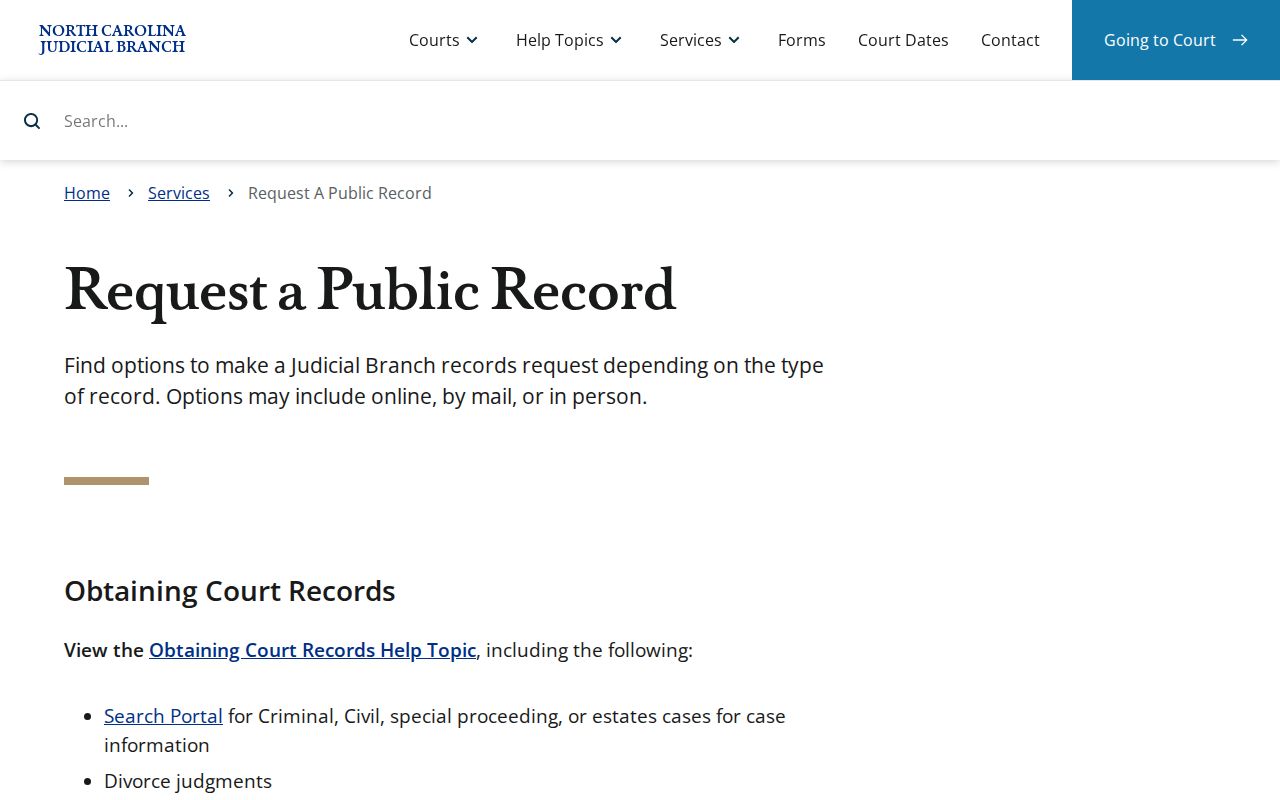
The two routes serve different needs. For a Wilkes case document, the clerk stays the right local contact.
Wilkes Audio and Transcript Records
A transcript is not a copy of the docket. It is a separate court record. An official court reporter prepares one at a party's request and sets the rate independently, while a transcriptionist may work from an audio recording. If a nonconfidential recording exists, ask the clerk about available audio and the actual CD cost. One caution from the official guidance matters here. District Court criminal proceedings generally are not recorded unless ordered, so a hearing entry on the docket does not guarantee audio or a transcript can be produced. Before contacting anyone, sort out what you want: the case record, available audio, or a reporter or transcriptionist transcript. That single question points you to the right channel. It also keeps the clerk from being mistaken for the reporter.
Ask About Missing Wilkes Records
Say Portal finds the case but not the document you want. Give the clerk the case number, and add the document title if you know it. Say whether you want a plain or certified copy. Give the approximate event date too. Ask too where the material sits. It may be at the local file counter, on paper from the 2025 conversion, or restricted. No official source promises remote delivery. No source promises a same-day result or a blanket identity rule. Confirm those details for your request. For administrative material rather than a Wilkes case document, review the NCAOC public-records policy. The NCAOC policy keeps its administrative copy rules separate from local case-file custody. Its normal administrative-record rate is $0.25 per page. Higher actual costs are possible for extraordinary assistance. That figure is not a fee schedule for a Wilkes clerk copy.
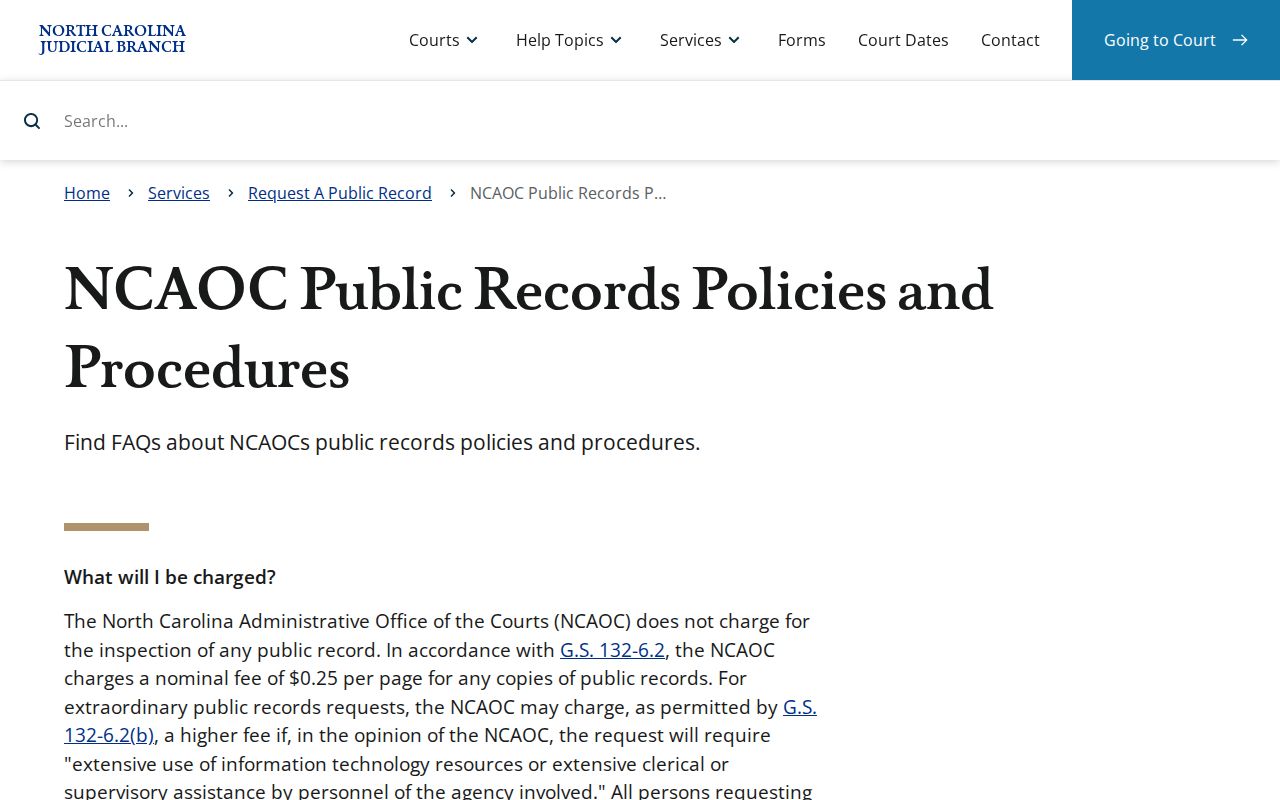
The policy covers a narrow administrative route. A local Wilkes court file request still runs through the clerk's statutory fees.
Wilkes Court Record Request Details
Contact the clerk with specifics. Give the case number, the document, the copy type, and whether certification is needed. Those details separate a Portal reference, file inspection, plain copy, certificate under seal, exemplification, and a transcript or audio inquiry.
Public Access and Sealed Records
North Carolina presumes public inspection of clerk-maintained records, files, dockets, and indexes. A law can say otherwise. The baseline has limits. Sealed or confidential matters, juvenile materials, unreturned criminal warrants, and protected identifiers may be missing or limited in anonymous Portal results. Registering an account does not unlock restricted material. For those Wilkes court records, the permitted path is the clerk or court process that fits the record category.
Key Rules:
G.S. 7A-109 requires clerks to keep court records, files, dockets, and indexes, with public inspection during regular office hours unless access is prohibited.
G.S. 132-1 supplies North Carolina’s general public-records background but does not override court confidentiality law or a sealing order.
G.S. 7B-3000 limits public inspection of juvenile clerk files except where the statute or court authority permits access.
G.S. 15A-151 provides limited-access confidentiality rules for expunction records held by the clerk.
The official G.S. 7A-109 record-keeping page is the local access starting point.
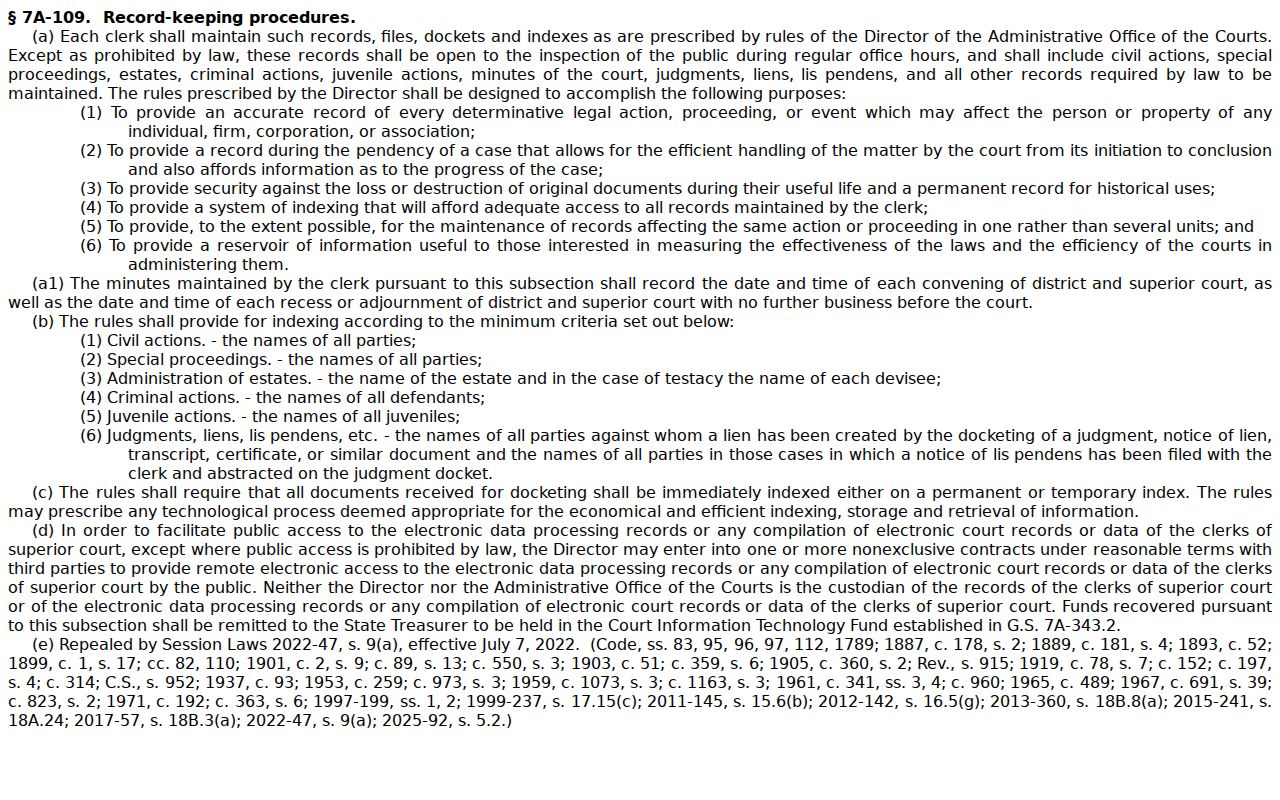
Public inspection is the starting rule. The listed confidentiality laws explain why some Wilkes court records need a different legal access route.
Wilkes Court Copy Authentication
Use precise terms with the clerk. A plain copy, a certificate under seal, and an exemplification are three different services. A transcript of judgment is a separate statutory service too. Portal may show a public Case Summary. A document image may appear where available. The court does not describe it as a clerk certification service. The record holder can tell you which form fits. The same office can state the charge that applies. Note: A bare request for a "certified record" invites follow-up, since the statute lists more than one authentication-related clerk service.